


Got a piece of pottery that’s seen better days? A kintsugi workshop in London is a pretty special way to not just fix it, but turn it into something even more beautiful. Forget superglue and a steady hand; this is about a whole philosophy of finding beauty in the bits that are broken. It's the perfect antidote to London's relentless pace.
Find Beauty in the Breaks with Kintsugi
It's easy to get caught up in the London hustle, but kintsugi offers a chance to slow right down. This ancient Japanese art isn't just about mending smashed ceramics; it’s a way of thinking that sees a story in every crack and chip.
At its heart, kintsugi is all about 'wabi-sabi' – a beautiful idea that finds perfection in things that are imperfect, temporary, and incomplete. Instead of trying to hide the damage, kintsugi uses golden lacquer to trace the lines of fracture, celebrating the object's history and resilience. The repairs aren't a cover-up; they're the main event.
A hands-on kintsugi workshop in London is so much more than your average craft class. It’s a genuinely calming, almost meditative experience. The careful, deliberate process of fitting the broken pieces back together is a lesson in patience and mindfulness – and a powerful metaphor for putting ourselves back together, too.
The whole point of kintsugi is that mending something doesn't just make it whole again. It makes it stronger, more interesting, and more beautiful because it was broken in the first place.
This guide is here to get you started on that journey. We'll walk you through how to find the right class, what to expect when you get there, and how to book a session that’ll have you turning cracks into art. By the time you're done, you won't just have a unique piece of pottery; you'll have a whole new way of looking at things.
And if you're feeling the creative buzz, there are plenty of other unique creative experiences in London to get stuck into. But for now, let’s get ready to make something beautiful out of the broken bits.
What’s a Kintsugi Workshop Actually Like?
Walking into your first kintsugi workshop feels a bit like finding a secret, calm oasis tucked away from the London hustle. Forget any ideas about needing to be a seasoned artist – these sessions are designed for absolute beginners. All you need is an open mind and a readiness to get stuck in.
When you arrive, you'll usually find your own little workstation, all set up with everything you’ll need. This typically includes a few pre-broken ceramic pieces (so you don't have to worry about smashing anything yourself!), a specialised adhesive, and of course, the famous shimmering gold-effect powder. The vibe is usually quiet and focused, a welcome change of pace from the city outside.
Getting Hands-On with the Mending Process
First up is the surprisingly satisfying job of cleaning and getting to know the ceramic fragments you’ll be working with. From there, your instructor will guide you through mixing the modern lacquer or epoxy, which is the glue that will hold your creation together. This is where the magic really starts to happen.
You'll carefully apply the adhesive to the broken edges and piece your item back together. It’s a slow, thoughtful process that demands a bit of patience and concentration. Once your piece is whole again, it’s time for the best part: tracing the cracks with the golden powder. This is the moment you turn those scars into beautiful, celebrated features.
The diagram below really captures the heart of it – moving from a simple break to a unique, beautiful mend.
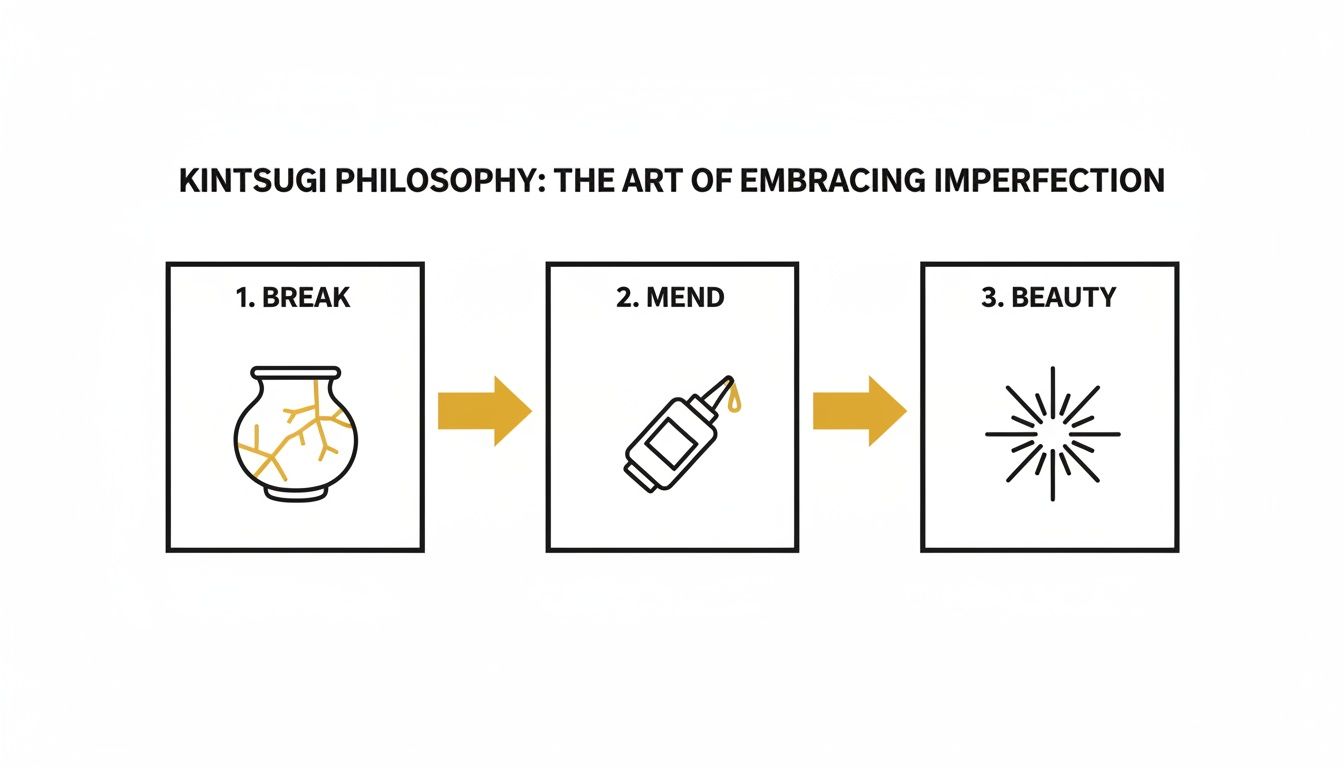
It’s a perfect visual for understanding that the act of repair is what creates a new, more resilient kind of beauty.
A Look Inside a Typical London Kintsugi Workshop
While every class has its own unique flavour, most beginner sessions in London follow a similar pattern. To give you a better idea of what to expect, here's a quick rundown of the key elements.
| Workshop Element | What's Typically Included |
|---|---|
| Duration | Usually 2-3 hours, perfect for an afternoon or evening. |
| Materials | All provided: pre-broken ceramics, modern lacquer/epoxy, gold powder, tools. |
| Technique | You'll learn the modern, quick-drying method, not the traditional urushi lacquer process. |
| Skill Level | Complete beginners are welcome. No prior art or craft experience needed. |
| Your Takeaway | You'll leave with your own finished kintsugi piece to display at home. |
| Class Size | Small groups are common, ensuring everyone gets one-on-one guidance. |
This setup means you can complete your piece and take it home in just one session, making it a fantastic and accessible creative outing.
One of the biggest lessons you’ll learn is that kintsugi isn't about chasing perfection. It’s about celebrating the journey of repair and honouring an object's history, turning something broken into something even more beautiful.
Kintsugi has become hugely popular, and London's workshop scene is buzzing with options. Prices generally sit between £40-£80, making it a pretty accessible way to try something new. You can find all sorts of different classes across the city, from cosy studios in Hackney to chic spots in Chelsea. You can find our curated selection of workshops on Guess What I Did.
By the end of your session, you won’t just head home with a lovely decorative piece. You'll also take away a tangible reminder of resilience and the undeniable beauty found in imperfection.
Why Kintsugi Is More Than Just a Craft
Kintsugi is so much more than just a technique for fixing broken pottery. At its heart, it's a profound philosophy with some genuinely therapeutic benefits. The whole practice is a powerful metaphor for personal healing, teaching us to embrace our histories, scars, and all, rather than trying to hide them away.
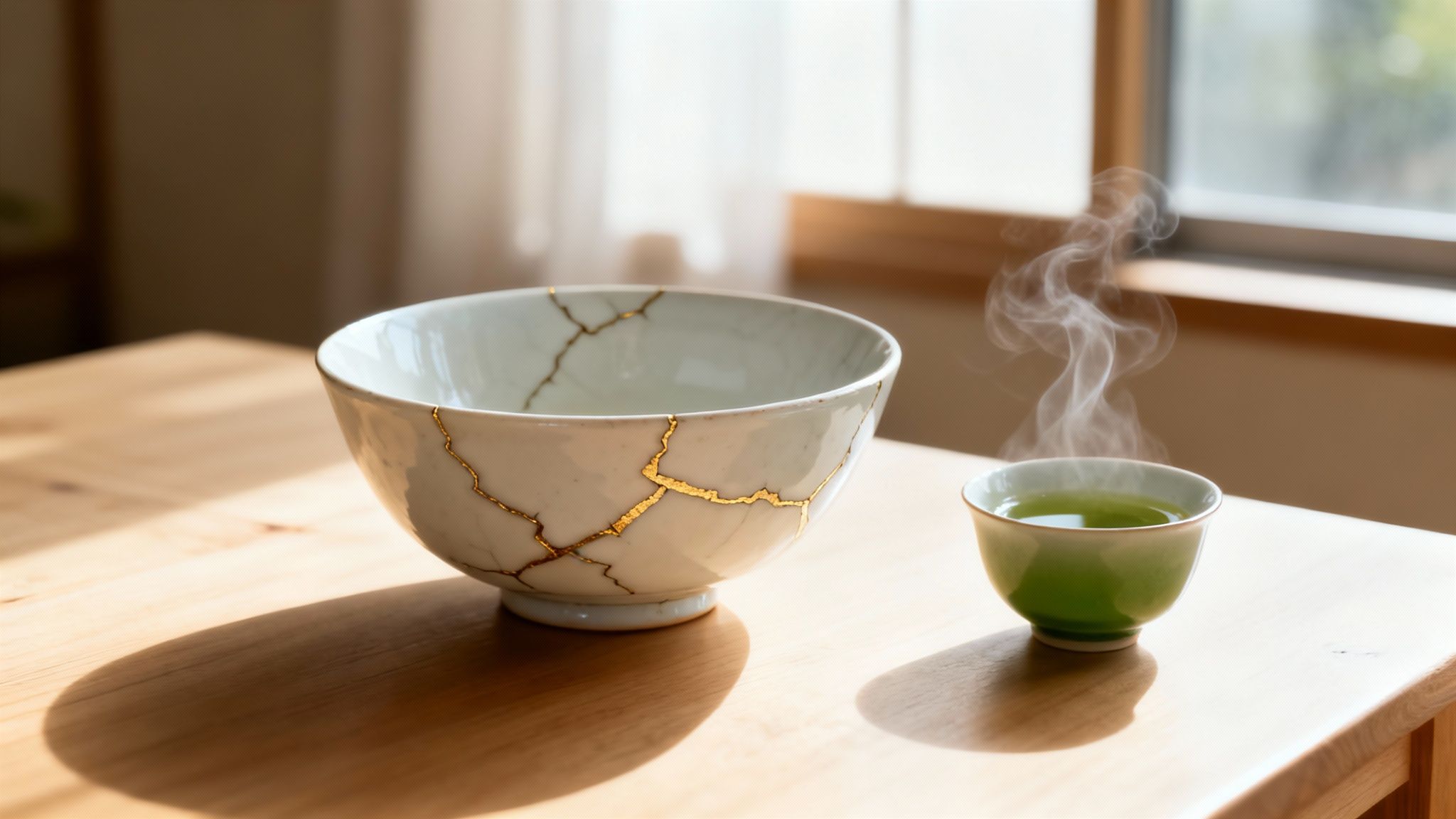
The slow, patient act of mending each piece encourages a deep sense of mindfulness. As you focus on fitting the fragments back together and carefully tracing the cracks with gold, the usual noise of daily life just seems to fade. It’s this quality that makes a kintsugi workshop in London such an effective form of art therapy, helping to dial down stress and cultivate a bit of calm.
This mindful approach is directly tied to the Japanese philosophy of wabi-sabi, which celebrates the beauty found in things that are imperfect, impermanent, and incomplete. Kintsugi brings this idea to life, showing that an object’s fractures don’t make it less valuable—instead, they become part of its unique story.
Kintsugi for Modern Mental Wellness
In our non-stop world, kintsugi offers a tangible way to practise self-compassion. The artform nudges you towards a shift in perspective, where "damage" isn't the end of the story but an essential chapter in a new, more resilient identity.
By highlighting the lines of repair with gold, kintsugi physically demonstrates that our experiences—especially the tough ones—can make us stronger and more beautiful. It is a celebration of resilience.
This link to mental wellness isn't just a nice idea; the practice is gaining real recognition for its restorative power. For instance, creative recovery programmes sometimes use art therapy techniques like kintsugi to help people build self-compassion and find new ways to approach their personal histories.
A Philosophy of Mending
The principles behind kintsugi don't have to stay on the workshop table. They encourage us to look at our own lives with more kindness, acknowledging that our struggles and scars are part of what makes us who we are. It’s about mending, not hiding.
While kintsugi focuses on visible repair as a beautiful art form, it's part of a broader world of caring for objects with a past. If you're interested in that, you might enjoy these general antique restoration tips. Ultimately, kintsugi is the perfect tool for Londoners looking for a meaningful way to unwind, reflect, and build a little more resilience in their own lives.
How to Choose the Right Kintsugi Workshop for You
With so many brilliant options popping up across the city, finding the perfect kintsugi workshop in London comes down to one simple question: are you after a fun, creative afternoon, or a deeper dive into this ancient Japanese philosophy?
Figuring that out is the first step, and it makes all the difference.
Think of it like choosing between a one-off wine tasting and a full sommelier course. Both are fantastic, but they serve completely different moods. A shorter taster session is ideal for dipping your toe in, giving you a beautiful introduction to the mindful process without a massive time commitment. You'll learn the essentials and leave with a gorgeous piece you repaired yourself.
On the other hand, a more intensive course is for those who really want to get under the skin of the craft. These multi-session workshops are where you’ll explore the history, philosophy, and traditional techniques in much greater detail.
Traditional Urushi vs Modern Epoxy
One of the biggest things to look out for is the technique being taught. The vast majority of beginner workshops in London use a modern epoxy resin, and for good reason. It’s a practical choice – it's safe, easy to handle, and dries within a couple of hours, meaning you can finish your entire project in a single sitting.
Traditional kintsugi, however, uses urushi lacquer, which is a natural sap from the Japanese lacquer tree. This is the authentic, centuries-old method. It's a much more demanding and lengthy process, requiring weeks or even months for the lacquer to cure properly. While it's less common in introductory classes, it’s the only way to create pieces that are genuinely food-safe and historically accurate.
When you're booking, always check what materials are being used. If you want a quick, satisfying experience, an epoxy-based class is perfect. If you’re passionate about traditional methods, you’ll want to seek out a specialised urushi course.
Key Factors for Your Decision
Beyond the materials, a few other things will shape your experience. Thinking about these points will help you find a workshop that feels just right.
- Class Size: Smaller groups usually mean more one-on-one time with the instructor. This can be a game-changer for getting personalised tips and asking questions as you go.
- Instructor's Style: Have a look at reviews or class descriptions to get a feel for the teacher's vibe. Are they focused more on the meditative side of things, or is it all about the practical craft skills? Find a style that clicks with you.
- Workshop Focus: Some sessions are pitched as mindful art therapy, while others feel more like a craft skills class. Decide what you want to get out of it—relaxation, a new skill, or a bit of both. You can browse all sorts of brilliant art classes in London to see what fits your creative mood.
The growing interest in authentic crafts means there are more in-depth learning opportunities than ever before. For instance, some studios now offer multi-week courses that properly delve into kintsugi's 15th-century origins and hands-on techniques, moving it way beyond a simple trend. You can discover more about these types of in-depth kintsugi courses to see how they differ.
Making an informed choice is the best way to make sure your workshop experience is as restorative and rewarding as possible.
Booking Your Class and Giving the Perfect Gift
Ready to dive into the world of mindful mending yourself, or know someone who’d absolutely love it? Booking a kintsugi workshop in London is your first, easy step towards creating something genuinely beautiful and meaningful.
It’s as simple as finding a date that suits you and securing your spot. Here at Guess What I Did, we’ve made the whole process straightforward and secure, so there’s nothing standing between you and your calming craft session.
Why a Kintsugi Workshop Is Such a Thoughtful Gift
Let’s be honest, we’ve all reached ‘peak stuff’. Gifting an experience creates memories that stick around long after another novelty mug has been pushed to the back of the cupboard. A kintsugi workshop, in particular, is a brilliant present because it’s more than just a fun afternoon out—it’s a chance to unwind, reflect, and pick up a skill rooted in a beautiful philosophy.
It’s the perfect fit for all sorts of occasions:
- Birthdays: A unique, creative celebration that feels a world away from the usual presents.
- Anniversaries: What better way to mark another year together than with a craft that symbolises mending and strengthening bonds?
- Team-Building: Get the team together for something collaborative and mindful in a relaxed, no-pressure setting.
- Just Because: Sometimes the best gifts are the ones that simply show you care about someone’s well-being.
A kintsugi workshop is as much a gift of philosophy as it is a craft. You’re giving someone an invitation to find beauty in their own imperfections and history, making it a truly impactful and memorable experience.
If you’re hunting for meaningful presents, kintsugi workshops are easily among the best self-care gifts for women that offer something more than just a material object. And for couples or best mates, sharing an experience like this is a fantastic way to connect. You can even book a Kintsugi Workshop for Two and create those golden memories together.
Making the Gift Extra Special
Want to really elevate the experience? Think about the presentation. You could package the workshop voucher with a small, beautiful ceramic piece or even a book on Japanese philosophy to give them a little taste of the concepts beforehand.
Popping it all in a nice gift box with a personal note explaining the meaning behind kintsugi adds a lovely, heartfelt touch. It turns a simple class booking into a proper invitation to a restorative, creative journey.
Got Questions About Kintsugi Workshops? We've Got Answers.
Stepping into a creative class for the first time can feel a bit mysterious. What do I wear? Do I need to be a secret artist? To help you feel completely at ease before your mindful mending session, we’ve answered some of the most common questions about our kintsugi workshops in London.
Think of this as your pre-flight checklist. Once you’ve read this, you can just show up, relax, and focus on the joy of the experience.
Do I Need Any Prior Art Experience?
Honestly? Not a single bit. This is the number one worry we hear, and you can put it completely to rest. Kintsugi workshops are designed for absolute beginners. The whole point is to enjoy the mindful process and the beautiful philosophy behind it, not to create a museum-worthy masterpiece.
Your instructor will be with you every step of the way, showing you everything from mixing the adhesive to that final, satisfying sweep of gold. All the materials, including pre-broken ceramic pieces, are ready and waiting for you. All you need to bring is a bit of curiosity.
What Should I Wear to the Workshop?
Comfort is king. We always suggest wearing clothes you don’t mind getting a little messy. While we provide aprons, there's always a tiny chance a bit of lacquer or gold powder might go astray. It’s all part of the fun!
To really get lost in the creative flow, it’s best to wear something older and cosier. A quick tip: avoid anything with long, dangly sleeves that could accidentally dip into your work. That way, you can relax and enjoy the hands-on process without a care in the world.
Can I Bring My Own Broken Pottery to Fix?
That’s a brilliant question, and the answer is usually "it depends." Most beginner-level classes provide everyone with standardised, pre-broken ceramics. This is actually a good thing—it means the instructor can guide the whole group through the same challenges and successes, making for a smoother learning curve.
However, some more advanced or private sessions might be open to you bringing a personal item. Because the type of ceramic and the way it broke can really change the repair process, you must check with the host before you book. A quick message to the workshop provider is all it takes to find out their policy and avoid any disappointment on the day.
Is the Final Piece Food Safe?
This is a really important one for your safety. In most introductory kintsugi workshops, you’ll be using modern epoxy resins. They're fantastic because they're safe to handle and dry quickly, which means you can finish your piece and take it home in a single session.
Important Takeaway: Pieces repaired with modern epoxy are for decorative use only. They are not food-safe, microwave-safe, or dishwasher-safe.
Occasionally, a more intensive workshop might use traditional urushi lacquer. If so, the final item could be food-safe after it has fully cured over several weeks, but this is rare for taster sessions. It’s always best to assume your finished artwork is a beautiful object to be admired, not one to eat or drink from, unless your instructor specifically says otherwise.
Ready to embrace imperfection and create something beautiful? At Guess What I Did, we make it simple to find and book the perfect creative experience for yourself or as a thoughtful gift. Explore our handpicked selection of workshops and start your own mindful mending journey today.
Discover your next creative adventure at https://www.guesswhatidid.co.uk.